Developer Gap
The missing curriculum between "programmer" and "software engineer"
College gives you a giant pile of small exercises divorced from real world problems. Bootcamps teach you just enough to get you through an interview so your new team can teach you.When you're in the tech world, everything is "how to build at scale" and build projects that can handle huge numbers of users and terabytes of data.There's a practical middle when it comes to software development that nobody teaches anyone.
Developer Gap is a project to fix that.
Who is this for?
This is a course for people who know how to program (this course is in JavaScript), but still are not at the top of their game. If the rate of releasing new features on your project is slowing as the codebase gets larger, this is for you. If releasing new code to production is always a gamble because your human QA is the only validation that's done, this is for you. If you're writing code that is difficult to maintain, this is most definitely for you.
What makes Developer Gap different?
Most online programming courses teach in tiny, isolated examples. They deal in simple functions, toy problems, and contrived scenarios that never resemble the messy, complicated systems you’ll face in real software development. They show you the nuts and bolts of how to use a tool, but not how to use them to create good, maintainable, testable applications that survive contact with reality. Without understanding how real-world engineering works, you miss out on the compounding benefits: the ability to release features faster, protection from new and recurring bugs in production, easier refactoring, and code you can actually trust.Developer Gap bridges the gap between classroom coding and professional software engineering, giving you the practical skills you need to thrive in real teams, real codebases, and real complexity.
Is this kind of thing still relevant in the age of AI generated code?
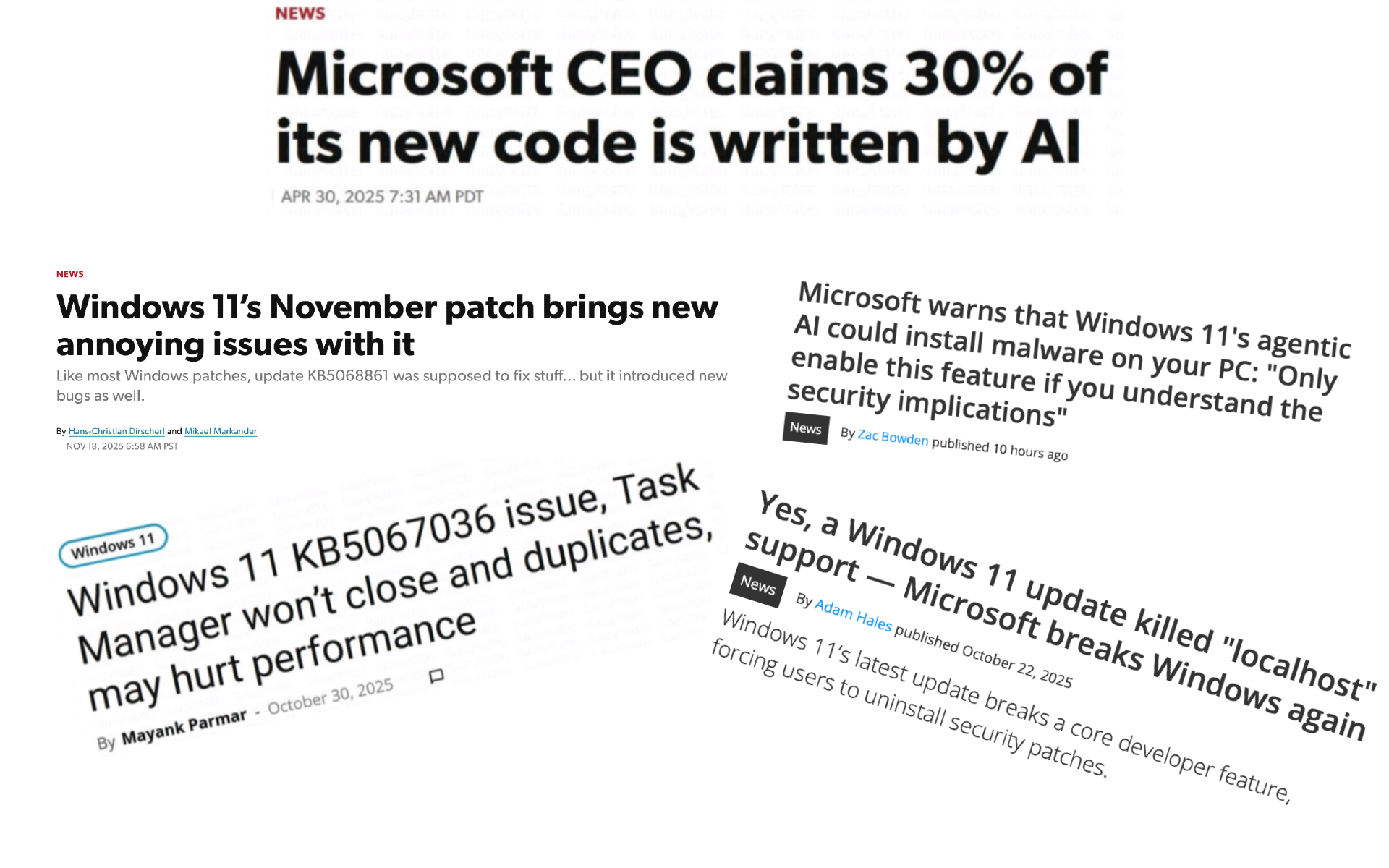
Seems like it, yeah.
On a more serious note, while AI generated code appears in seconds, it's still just code. Code that was written at the behest of a prompt written by a person. AI code isn't flawless, and doesn't understand anything beyond what it's been instructed.Automated tests are a way of creating and strengthening confidence in code that was written by AI, just as they do code written directly by other programmers. Just like with human-generated code, tests turn requirements into guarantees.Automated tests don't indicate a lack of trust. They are a way of protecting yourselves against human fallibility and the limits of AI code generation.
Let's get down to brass tacks. What's this cost? When do we see it?
Developer Gap's first course is focused on unit testing, writing testable code, and design patterns. The first portion of the course will be released on February 1st 2026, and an additional portion will be released on the first of the month every month through January of 2027. We want to make sure that you have enough material to really bite into each month but have time to sit with each months' concepts before moving onto the next.Because the course isn't released yet, we're offering the early birds a discount. The full course will cost $147 when it is generally available. But that's the future, not now. Right now, the full course is going for only $97.
Can I see what I'm getting into first?
Sure can. I've assembled a sample document that gives a light overview of testing terms, and then walks through the process of creating the solution to a specific problem and adding to it and expanding functionality. The whole thing is written in the context of writing code using design patterns, and provides working examples of the tests to go with it.
I'm in. How do I get things started?
Great! We're doing this pretty informally here in the pre-launch period. Send me an email at [email protected] and I'll get you all squared away.
I've got more questions
No problem! Shoot them over to [email protected]